
Introduction
Digital marketing has never been more competitive. Whether you're running a small business, managing an agency, or building your personal brand, having the right tools can make all the difference.
But here's the mistake many marketers make—they sign up for every trending platform they come across. More tools don't always mean better results.
The best marketers rely on a handful of reliable tools that help them create content, improve SEO, run campaigns, track performance, and stay organized.
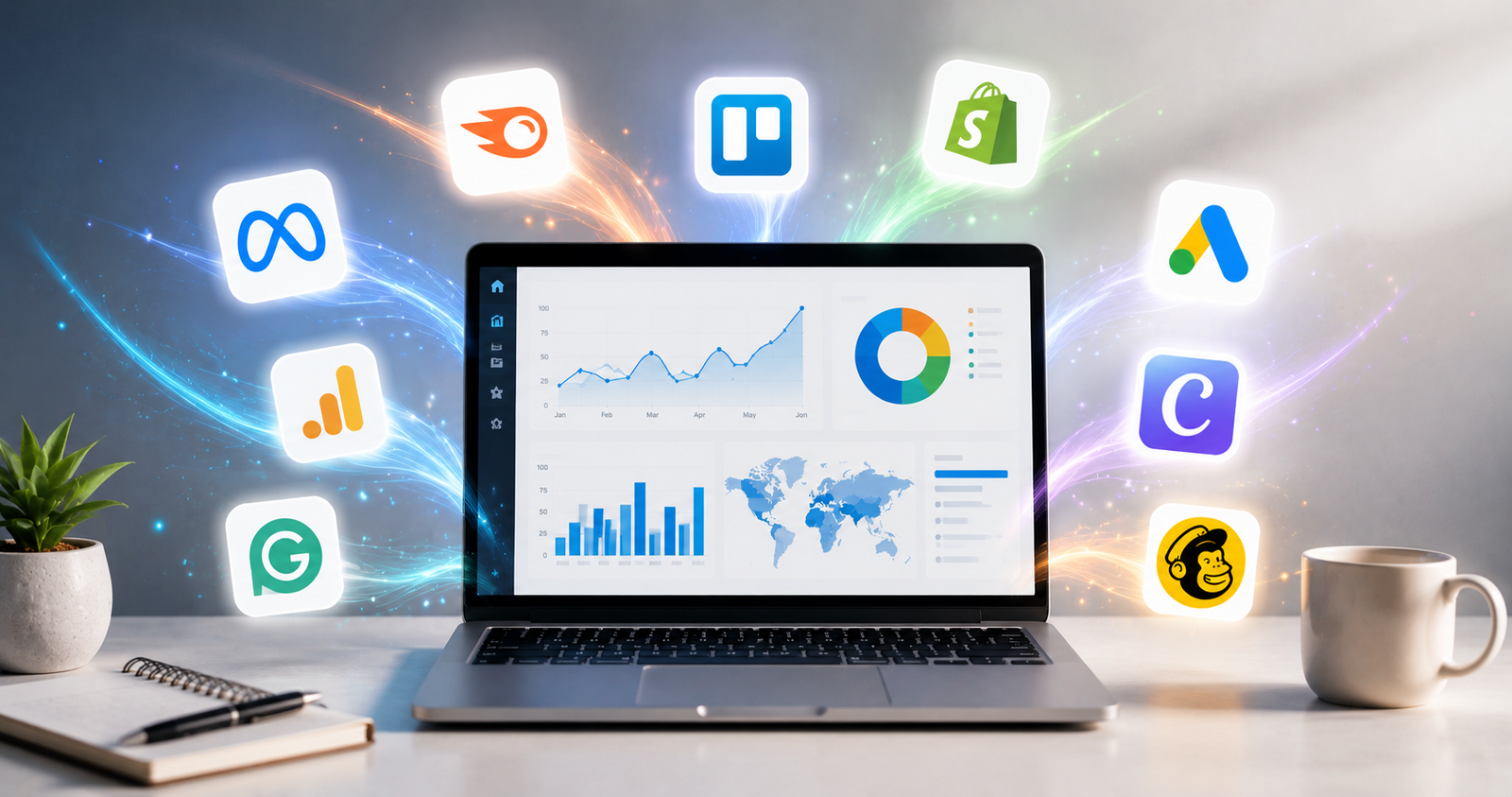
In this guide, we've rounded up 9 essential digital marketing tools that are trusted by professionals and valuable for beginners alike.
1. ChatGPT – Your AI Marketing Assistant
If you're involved in content creation, ChatGPT can save hours every week. From brainstorming blog topics and writing social media captions to generating email drafts and ad copy, it speeds up repetitive tasks while helping spark new ideas.
Best for:
- Content writing
- Idea generation
- Marketing research
- Email copy
- Ad copy
Why use it?
Think of ChatGPT as your creative assistant. It won't replace strategy, but it can help you work faster and overcome creative blocks.
2. Semrush – All-in-One SEO Tool
SEO is one of the most effective ways to generate long-term traffic, and Semrush is one of the industry's leading platforms for it.
You can research keywords, audit your website, analyze competitors, monitor rankings, and discover backlink opportunities—all from one dashboard.
Best for:
- Keyword research
- Competitor analysis
- Site audits
- Rank tracking
Why use it?
If you want your website to appear higher on Google, Semrush helps you make data-driven SEO decisions.
3. Google Analytics 4 – Understand Your Visitors
Getting traffic is only half the battle. Google Analytics 4 shows what visitors do once they land on your website.
You'll learn where users come from, which pages perform best, and what actions lead to conversions.
Best for:
- Website analytics
- Conversion tracking
- User behavior
- Campaign performance
Why use it?
It helps you make decisions based on real data instead of guesswork.
4. Google Search Console – Monitor Your Search Performance
Google Search Console tells you how your website performs in Google Search.
It shows the keywords you're ranking for, indexing issues, click-through rates, and technical SEO errors that may affect visibility.
Best for:
- Search performance
- Technical SEO
- Keyword insights
- Indexing issues
Why use it?
It's free, easy to set up, and essential for anyone serious about SEO.
5. Canva – Create Professional Designs in Minutes
Not every business has an in-house designer, and that's where Canva shines.
With ready-made templates and drag-and-drop editing, you can create social media posts, presentations, banners, flyers, and marketing materials with ease.
Best for:
- Social media graphics
- Presentations
- Marketing creatives
- Brand assets
Why use it?
It helps maintain a professional and consistent brand image without requiring advanced design skills.
6. Meta Business Suite – Manage Facebook & Instagram
If your audience is active on Facebook or Instagram, Meta Business Suite simplifies content scheduling, messaging, and performance tracking.
Instead of juggling multiple apps, you can manage everything from one dashboard.
Best for:
- Scheduling posts
- Managing messages
- Social media insights
- Facebook & Instagram management
Why use it?
Consistency is key to social media growth, and scheduling content in advance helps you stay active.
7. Google Ads – Reach Customers Faster
Unlike SEO, which takes time, Google Ads allows you to appear in front of potential customers immediately.
Whether you're promoting a service, product, or local business, targeted ads help you connect with people actively searching for what you offer.
Best for:
- Lead generation
- Search ads
- Display ads
- Local business promotion
Why use it?
It's one of the fastest ways to generate qualified traffic and leads when managed effectively.
8. Mailchimp – Build Strong Customer Relationships
Email marketing continues to deliver one of the highest returns on investment.
Mailchimp makes it easy to create newsletters, automate campaigns, and stay connected with your audience.
Best for:
- Email campaigns
- Newsletters
- Customer nurturing
- Marketing automation
Why use it?
Unlike social media, your email list is an audience you own, making it a valuable long-term marketing asset.
9. Notion – Keep Everything Organized
Marketing involves planning, collaboration, and staying on top of multiple projects. Notion helps you manage content calendars, campaign plans, SOPs, and team tasks—all in one workspace.
Best for:
- Project management
- Content calendars
- Team collaboration
- Campaign planning
Why use it?
A well-organized workflow saves time, reduces confusion, and keeps your marketing efforts on track.
How to Choose the Right Tools
You don't need to use every tool at once. Start with the ones that align with your goals.
| GoalRecommended Tools | |
| Improve SEO | Semrush + Google Search Console |
| Create Content | ChatGPT + Canva |
| Manage Social Media | Meta Business Suite |
| Run Paid Ads | Google Ads |
| Track Performance | Google Analytics 4 |
| Stay Organized | Notion |
| Build Email Marketing | Mailchimp |
As your business grows, you can expand your toolkit based on your needs.
Final Thoughts
The best digital marketers don't rely on dozens of tools—they rely on the right ones.
The nine tools in this guide cover every essential area of digital marketing, from content creation and SEO to analytics, advertising, and team collaboration. Whether you're just starting out or looking to streamline your workflow, mastering these tools will help you work more efficiently and make better marketing decisions.
Remember, tools don't drive results on their own. It's how you use them that makes the difference.
Frequently Asked Questions
1. Which digital marketing tool is best for beginners?
ChatGPT, Canva, Google Analytics 4, and Google Search Console are excellent starting points because they're user-friendly and cover core marketing tasks.
2. Do I need paid tools to succeed?
No. Many powerful tools offer free plans, including Google Analytics, Google Search Console, Canva, and Meta Business Suite. You can always upgrade as your business grows.
3. Which tool is best for SEO?
Semrush is one of the most comprehensive SEO platforms, especially when paired with Google Search Console for performance insights.
4. What's the most important marketing tool overall?
There's no single "best" tool. The right choice depends on your goals, but ChatGPT, Google Analytics, and Semrush are among the most versatile.
5. Can AI replace digital marketers?
No. AI is a productivity tool that supports marketers by automating repetitive tasks, but creativity, strategy, and human insight remain essential.
Ready to Elevate Your Digital Marketing?
At Enma Digital, we help businesses turn the right tools into real results. From SEO and content marketing to paid advertising, branding, and creative strategy, our team builds marketing systems that drive measurable growth.
Want to strengthen your digital presence? Get in touch with Enma Digital and let's build a smarter marketing strategy together.